庭の随筆 · Garden essays
Why a Garden Is a Spiritual Practice.
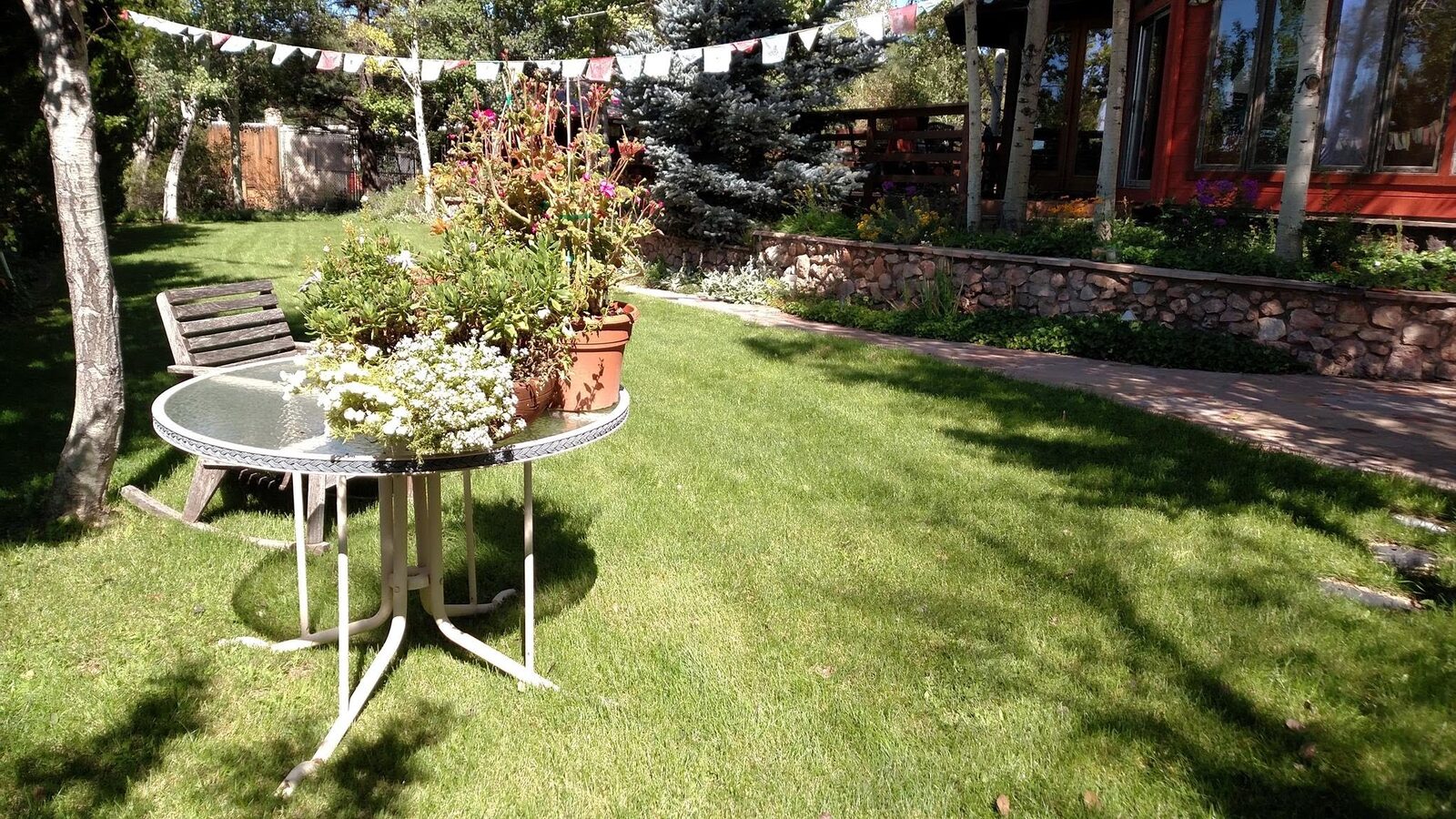
In the West we say we “have” a garden, as if it were a possession. In Japan, you are more likely to hear that a person keeps a garden — the same word you might use for keeping a promise. The garden is not something you own. It is a relationship you tend.
I learned this slowly, over many years, building my own garden in the high desert. It began small and it kept growing, the way a real love does, until it was something large and alive — a koi pond, a waterfall, an arched stone bridge, a torii gate. And the longer I tended it, the more it tended me.
Here is the first thing a garden teaches: you are not in charge of the timeline. You can want the moss to spread and the tree to fill, but the garden answers only to its own seasons. Japanese gardeners have a word for the beauty this patience produces — wabi-sabi, the quiet perfection of things that are weathered, imperfect, and impermanent. A cracked stone, a fallen leaf, the green haze of age on a lantern. The garden is beautiful because it is passing, not in spite of it. To keep a garden is to make peace with time.
The second teaching is that attention is a form of devotion. A traditional Japanese gardener will bow to a stone before setting it, and will place it as carefully as a calligrapher places a single line. Nothing is too small to do with your whole heart. When I first read, as a boy, that a master sweeps the garden as carefully as he draws the sword, I recognized it immediately — because my own Diné grandmothers lived the same truth: that how you do the small things is how you do everything. This is hózhó, walking in beauty — not beauty as decoration, but beauty as right relationship with everything alive.
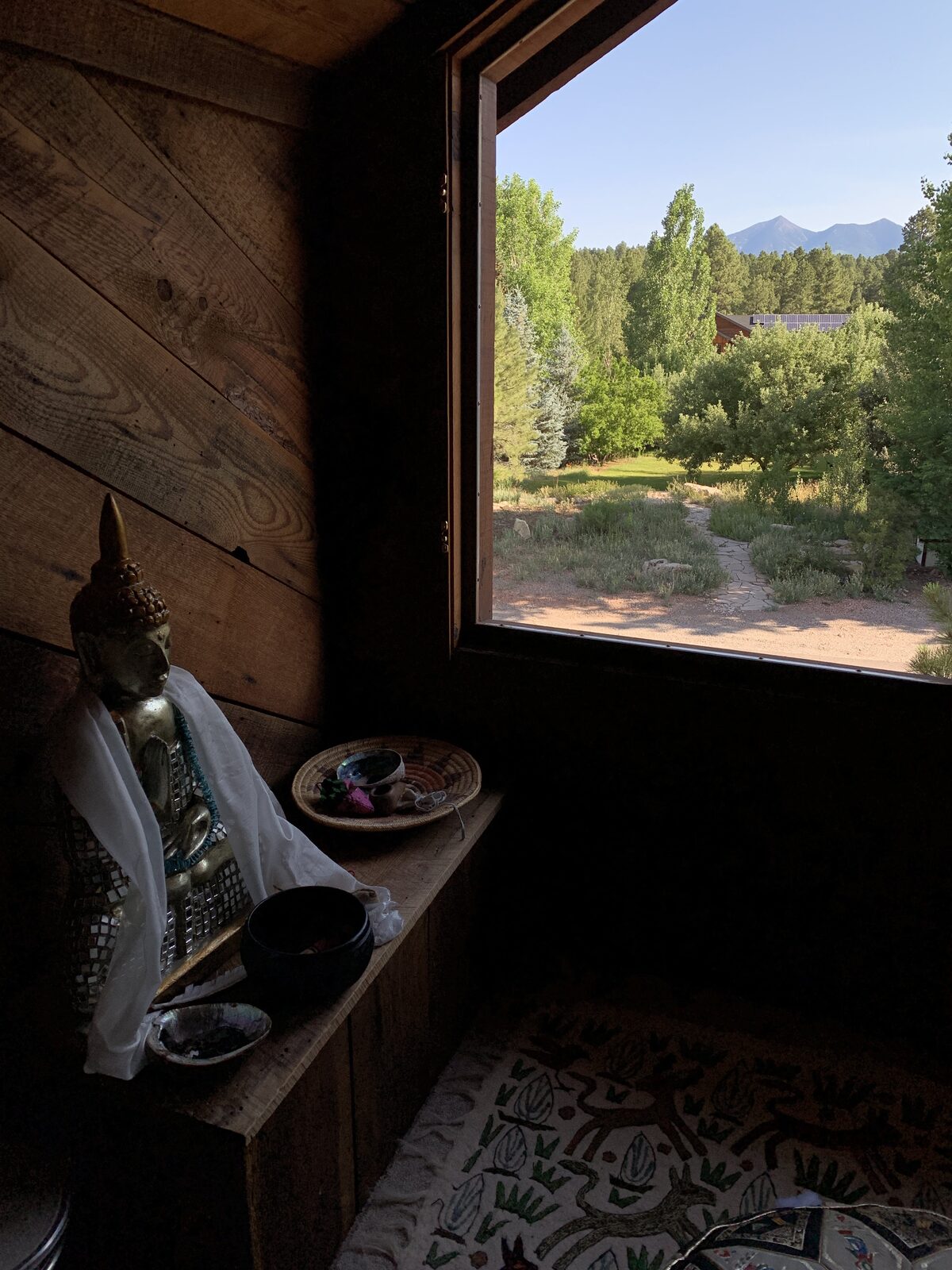
The third teaching is my favorite, because it is a kind of humility built into the design. The Japanese call it shakkei — “borrowed scenery.” A great garden does not pretend to contain the whole world; it frames a distant mountain or a far ridge so that it becomes part of the composition, even though it belongs to no one. The garden bows to something larger than itself.
I built my meditation room to do exactly this — to look out and frame a mountain my people hold sacred. Every morning the garden borrowed that mountain, and I was reminded that whatever I had made there was small, and held inside something vast and old that I did not make at all. That is the right posture for a human being. The garden teaches it without a single word.
You do not need acreage to begin. A single plant on a windowsill, kept with real attention, is already the whole practice. The point was never the size of the garden. The point is what tending does to the one who tends.
That is the conviction underneath everything I write: the old disciplines — Japanese, Diné, Baltic — are not museum pieces. They are working technology for a modern life. A garden is one of the gentlest of them, and one of the most complete.
庭の随筆 · Garden essays
More from the garden that was.
New essays and the free tools — one email, no noise. Arigatō.