庭の随筆 · Garden essays
The Arched Bridge.
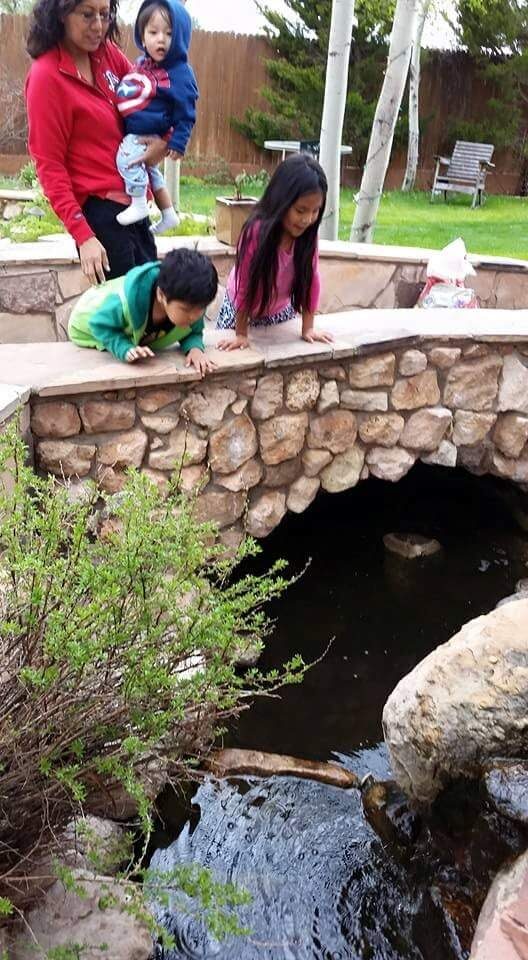
For twelve years, in a garden I built and tended, there was a small arched stone bridge over the koi pond. It did not lead anywhere you could not reach by walking around. That was the point.
The Japanese garden bridge — the steep, drum-backed taikobashi — was almost never built merely to get across. It was built to mark a crossing. To step up and over its high arch is to feel, in your own body, that you are leaving one kind of space and entering another. Like the torii gate at a shrine, the bridge is a threshold. It says: what is on the other side is not the same as what is behind you. Cross with attention.
This is one of the oldest human intuitions, and Japan kept it more carefully than almost anywhere. In Buddhist thought there is the image of crossing to the “other shore” — higan — from the restless world of striving to a shore of peace. The bridge in the garden is a small daily rehearsal of that larger crossing. You go up; for a moment you are suspended over the water, between two banks, belonging fully to neither; and then you come down, and you have arrived somewhere, even if the garden looks the same.
I have thought about that in-between place my whole life, because I have lived on it.
I am Diné on one side and I carry other lines as well; I was raised in a hogan and I built a Japanese garden; I have always belonged fully to more than one world and therefore, in the eyes of each, never only to it. For a long time that felt like a failure — like being caught on the arch of the bridge, unable to reach either bank. And then, slowly, I understood the truth the bridge had been teaching me all along:
Some people are not meant to stand on one shore. Some people are the bridge.
The one who carries something precious from one world to another — a song, a discipline, a way of seeing — has to be able to stand in the middle without falling. The diaspora knows this in its bones. So does anyone who has ever felt like a foreigner in both of their own countries. You are not stranded between worlds. You are the crossing by which something important gets from one side to the other. That is not a lesser place to stand. It may be the most necessary one there is.
This is the heart of everything I write. My characters are almost always bridge-people: the ones who carry what matters across hard ground and arrive whole. The Far Messengers is about exactly this vocation. Stone Breath is a love story between two people learning to stop apologizing for standing in more than one world at once.
So if you feel caught on the arch right now — between an old country and a new one, an old self and a becoming one — I want to offer you the garden's oldest teaching. You are not lost on the bridge. You are the bridge. Cross with attention, and carry something good to the other side.
庭の随筆 · Garden essays
More from the garden that was.
New essays and the free tools — one email, no noise. Arigatō.