庭の随筆 · Garden essays
The Sound of Water.
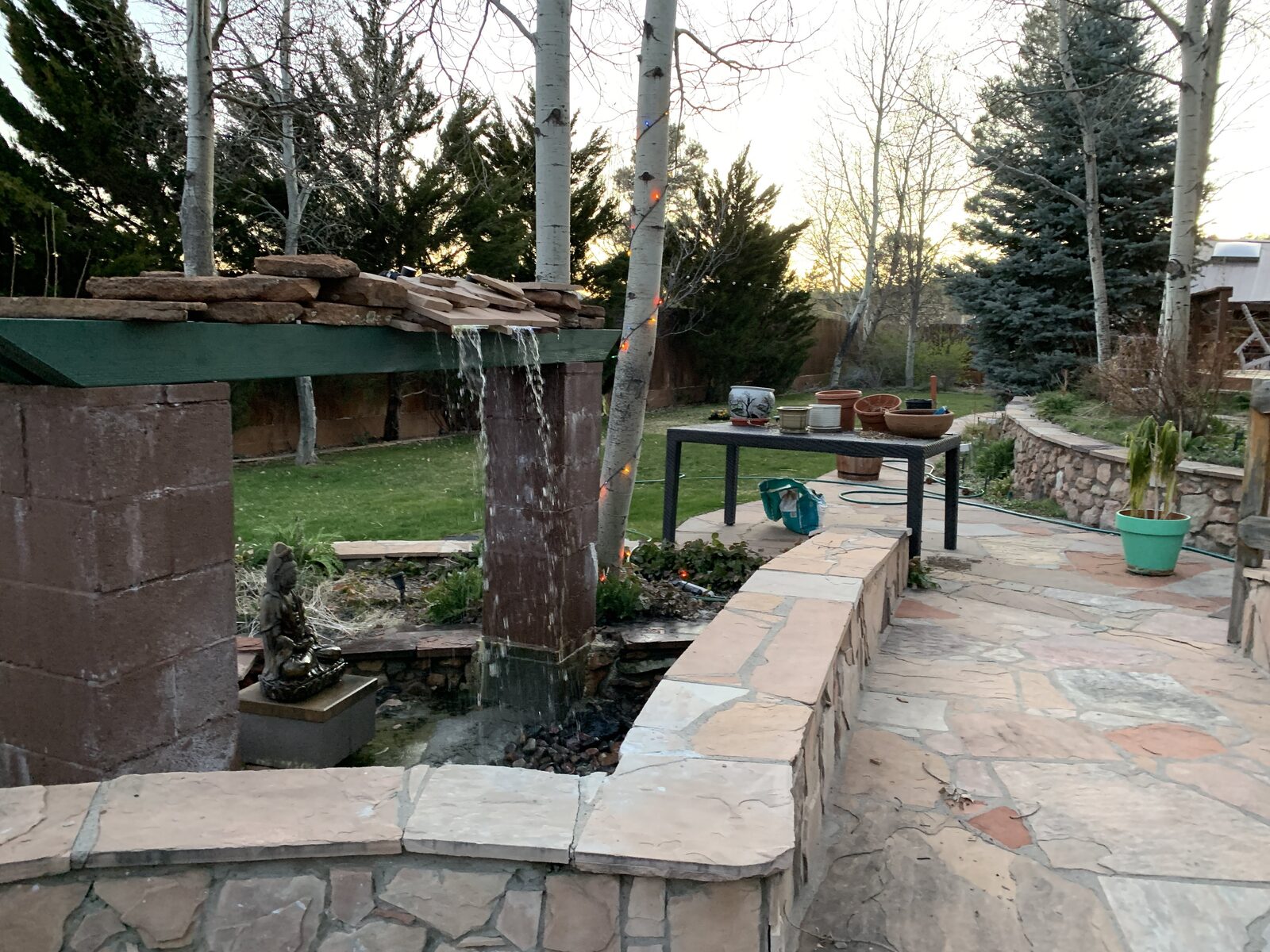
Of everything in the garden I built and kept for twelve years, it was the water people went quiet beside.
They could talk their way past the koi and the stone lanterns, but when they reached the waterfall, the conversation stopped. Something in falling water asks us to listen. The Japanese understood this so completely that they made the sound itself an art — even burying an upturned jar beneath a basin, the suikinkutsu, so that each drop falls into a hidden chamber and rings like a small bell underground. They were not decorating the garden. They were tuning it.
Water sits at the center of Japanese spiritual life. Before you enter a shrine, you rinse your hands and mouth at the stone basin — a small act of misogi, purification, the washing-away of what you carry in so that you arrive clean. Standing beneath a cold waterfall to pray is one of the oldest ascetic practices in the country. Water is the element that makes you ready.
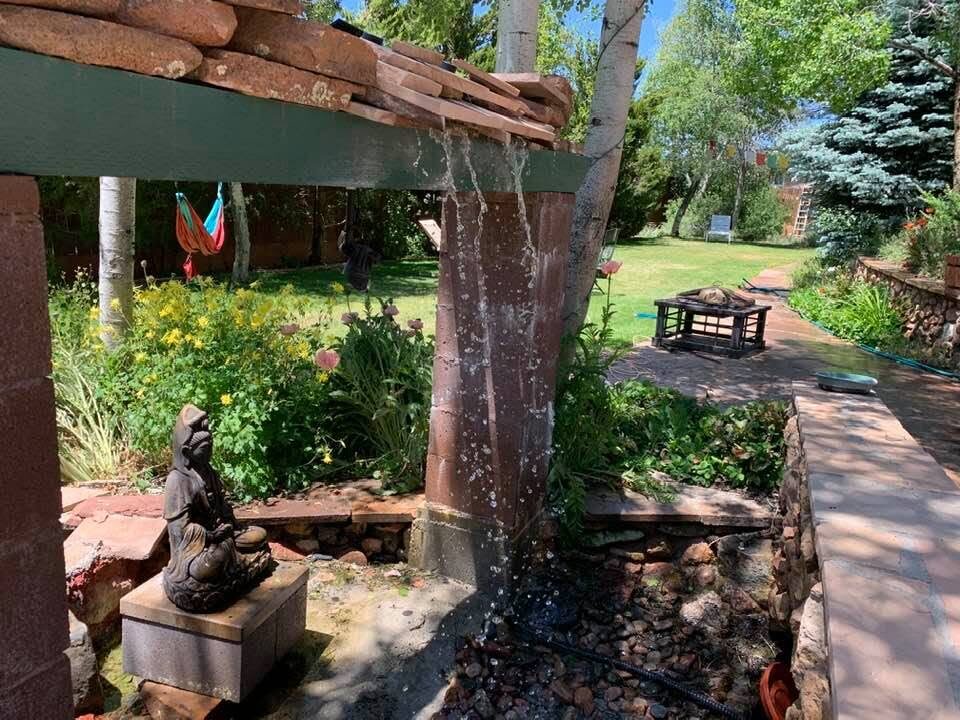
And water is the great teacher of flow. It does not argue with the rock; it goes around, and given enough time, the yielding water is what wears the hard stone smooth. There is a strength here that has nothing to do with force. The waterfall is powerful precisely because it never resists gravity — it gives itself completely to the fall, and that total surrender is what makes the sound that stops us in our tracks.
My own people hold water as sacred too. On the high desert, where I grew up, water is never ordinary — it is prayer, it is survival, it is the thing you never waste and always thank. So when I raised a waterfall over my koi pond, I was not only building something Japanese. I was building a place where two of my inheritances agreed: that water is holy, and that listening to it does something to the human nervous system that we are only now, with our instruments, beginning to measure.
Because that is the part science has caught up to. The sound of moving water measurably slows us down — it pulls the nervous system out of its braced, watchful state and into rest. What the shrine-builders knew by feeling, we can now read on a monitor. This is the whole premise of my work: the old practices were not superstition. They were field-tested technology for the human body, and they still work.
You may not have a waterfall. Almost no one does. But you have breath, which is the water you always carry — it flows, it can be listened to, and giving yourself completely to a long, slow exhale does for you what the falling water does for the garden. It tunes you.
That is where I would tell you to start. Not with a pond. With one slow breath, listened to the way you would listen to water.
庭の随筆 · Garden essays
More from the garden that was.
New essays and the free tools — one email, no noise. Arigatō.