庭の記憶 · Tony's story
A Torii in the High Desert.
I grew up in a hogan.
If you have never seen one: a hogan is the traditional Diné home — round, built of earth and timber, its door facing east to meet the morning sun. Ours had a wooden table and a kerosene lamp, and at night that light was small and golden and did not quite reach the corners. That lamp is where my life with Japan began.
Because that is where I read. I was a Navajo boy on the high desert, and by that small flame I read about samurai. Martial arts. The old Japanese stories — the ones where a swordsman is also a poet, where a master sweeps the garden as carefully as he draws the blade, where the strongest thing a person can do is grow quiet. I had no word for it then, but I recognized something. These people on the far side of the world were describing a way of being I already half-knew from my own grandmothers: that discipline is a form of love. That the land is alive. That how you do the small things is how you do everything.
The disciplines were already cousins
The more I read, the more the two worlds rhymed.
Bushidō, the way of the warrior — restraint, honor, service, a strength that never needs to shout — was not far from the Diné warrior's code I was raised inside. The Shinto sense that kami, the sacred, lives in a particular mountain, a particular waterfall, a particular old tree — that was my grandmother's world exactly. We Diné have our four sacred mountains that hold the world in balance; we have hózhó, walking in beauty, in right relationship with everything alive. When I read that a Japanese gardener bows to a stone before moving it, I did not find it strange. I found it familiar.
Two peoples, an ocean apart, who never met — and both had decided that the way you hold a cup, sweep a floor, or greet a mountain is not small. It is the whole thing.
So I began to build
A boy reads by lamplight, and then a man builds by daylight.
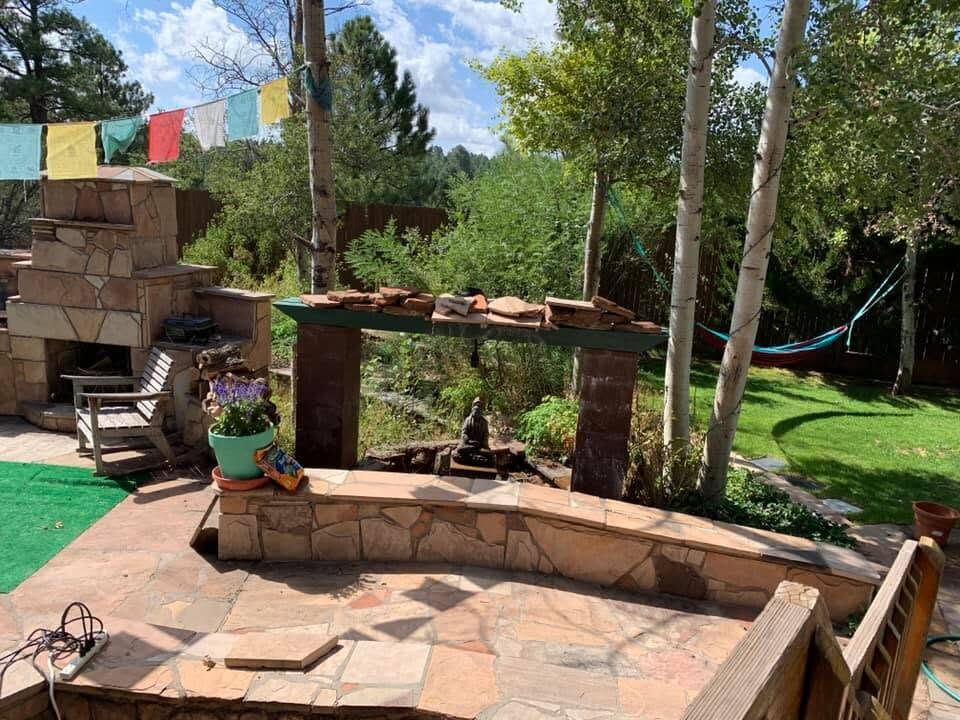
I sent away for paper-making kits and learned to pull washi by hand. I started to garden — and the garden kept growing, the way a real love does, until it was something large and alive. I dug a koi pond and raised a waterfall over it. At the head of the water I set a torii gate, and beneath it I placed a Buddha — my own quiet blessing on the whole space, my two teachers standing together. I set a small arched stone bridge over the pond. And I made a meditation room positioned to look out at the sacred mountain, so that stillness and the mountain could keep each other company.
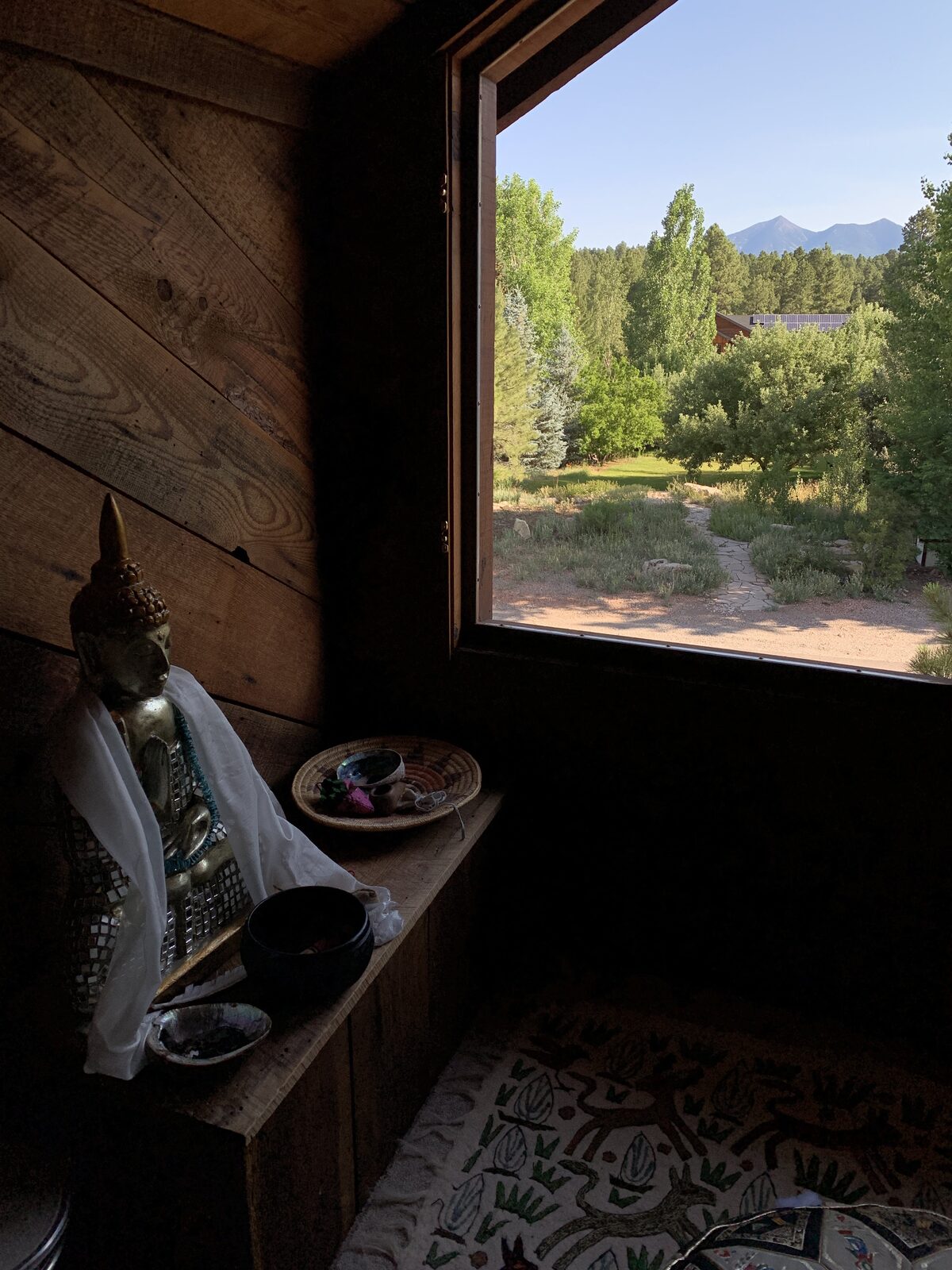
I did not build any of this to own a piece of Japan. I built it the way you set a table for a guest who fed you when you were hungry. Japanese culture fed me. This was how I said thank you.
The koi and the waterfall
There is an old Japanese legend I love. A koi swims upriver against the current, and if it reaches the top of the waterfall at the Dragon Gate — the tōryūmon — it is transformed into a dragon. It is a story about what adversity does to a soul that refuses to quit: the same hard water that could sweep you away is the exact thing that makes you into something greater.
I did not know, when I dug that pond, how much my family would need that story.
Because life brings uncertain times — to every family, and to ours. Seasons where the current is very strong. And in those seasons, the disciplines I had gathered by that kerosene lamp were not decoration. They were structure. The morning stillness in the meditation room. The patience the garden demands. The quiet that Japanese practice taught me to keep when everything wanted me loud. Gaman — to endure the unbearable with dignity — is a Japanese word, but it held my family the way our own Diné teachings did. The two traditions carried us together.
That is the thing about real discipline. It does not announce itself when the sky is clear. It shows up when the water rises.
We have children for the future
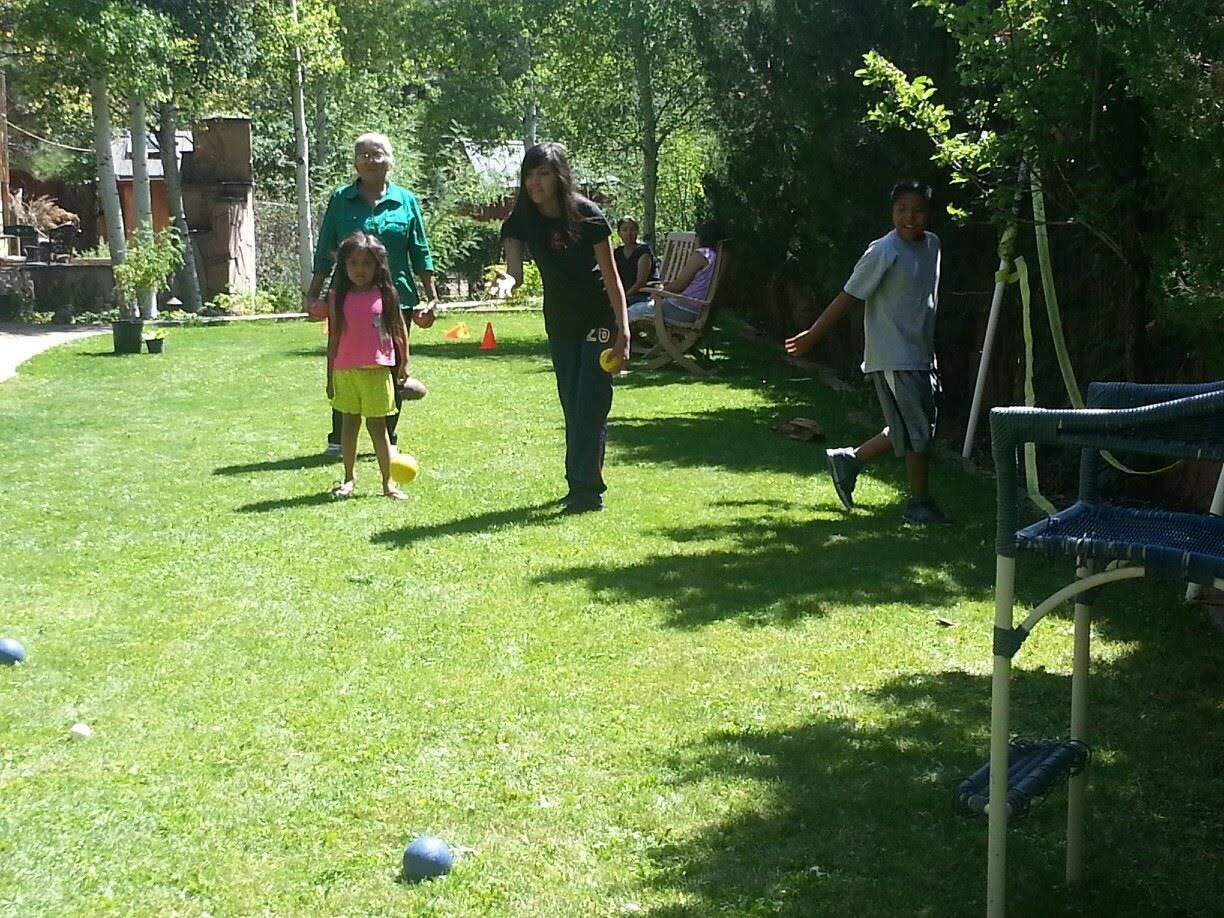
I did not build the garden for myself. I built it for the ones who come after.
We have children — and children mean you are building for a future you will not fully see. So the koi pond, the torii, the meditation room, the paper pulled by hand — these are not my hobbies. They are an inheritance I am setting down where my kids and grandkids will find it. I want them to grow up knowing, the way I came to know by that small flame, that the world is alive, that discipline is love, that there are quiet tools older than any crisis — and that some of the best of them came to us as a gift from Japan.
That is the whole idea behind everything I write. The Ancestral Watch books are stories, but underneath them is this exact conviction: that the practices the old cultures kept — Diné, Baltic, Japanese — are not museum pieces. They are working technology for uncertain times. Stone Breath is about the stillness I first tasted in that meditation room. The Council Fire is about what happens when the keepers of many peoples' oldest knowledge sit down together — which is, in a way, what happened at my wooden table by the lamp. The Far Messengers is about carrying what matters across hard ground and arriving whole.
I have since let that garden go — sold, after twelve years of tending it. For a moment it broke my heart. But it is also the most Japanese thing in this whole story. Nothing beautiful was ever meant to be gripped forever; it was meant to be tended with your whole attention, and then, when the season turns, released — and carried on in those who saw it. The garden is gone. What it taught is not. That is why I write it down.
To Japan: thank you. You reached a boy in a hogan on the high desert and you never knew it, and you helped raise a family half a world away. I have tried, all my life, to honor that gift — not to take it, but to tend it, and to pass it on.
The koi is still climbing. The mountain is still there. And močiutė, shimásání, the grandmothers of every line — they are still standing behind us.
庭の随筆 · Garden essays
More from the garden that was.
New essays and the free tools — one email, no noise. Arigatō.