
Preview the book
EXCERPT 2: THE OPENING (Chapter 1)
She saw him before he saw her.
The bus from Vilnius pulled up to a dusty village shelter, and a man stepped off holding a cardboard box wrapped in a woven blanket. He stood there for a moment, looking around like he was waiting for the ground to tell him where to go.
Austėja watched from the heritage center window. She'd seen a lot of visitors over the years. This one was different.
Tired, she thought. Not in the body. In the soul.
EXCERPT 3: THE PORCH SCENE (Chapter 8)
They were sitting on her porch, watching the river. He'd been quiet all evening. She knew why. He'd tried to tell her something earlier, and the words had stuck in his throat.
She waited. She was good at waiting.
"I've spent my whole life proving I belong," he finally said. "In rooms where I was the only one. In schools where I wasn't supposed to succeed. In jobs where they hired me because I was different and then didn't know what to do with me."
She didn't speak.
"I thought if I just achieved enough, earned enough, became enough—eventually it would stop feeling like I was faking it." He laughed, but it wasn't funny. "It never stops."
Austėja reached over and took his hand.
"I know," she said.
He looked at her.
"I left this village when I was eighteen. I went to Vilnius, then Paris, then Copenhagen. I cooked in restaurants where no one knew my name and no one asked. I thought if I just became someone else, I'd finally feel like someone."
"Did it work?"
"No." She smiled. "So I came home. And you know what I learned?"
He waited.
"You don't belong because you earn it. You belong because you show up. Because you stay. Because you let people see you—even the parts you're afraid of."
He stared at the river for a long time.
Then, slowly, he let himself cry.
She didn't move. Didn't speak. Just held his hand and watched the river with him.
Later, he would call that the moment everything changed. Not because he'd overcome his fear—but because he'd finally let someone see it.
EXCERPT 4: THE MUSEUM OF PROOF (Chapter 12)
Mile 11. The worst mile.
His body wanted to quit. His mind was full of reasons to stop.
He reached into his pocket. Not for the stone—for something else. A small notebook he'd been keeping for years. His museum.
He flipped to a page while still running. Glanced at the words.
Ran 15:03 5k. Legs burned. Kept going.
Ran 33:18 10k. Wanted to stop at mile 4. Didn't.
Ran 1:14 half marathon. Trained through injuries, through doubt, through days I wanted to quit. Didn't.
Finished MBA while training full time. Slept 5 hours a night for two years. Didn't quit.
Scattered Algis's ashes. Thought I'd fall apart. Didn't.
Proposed to Austėja. Thought she'd say no. She said yes.
Held our first child. Thought I'd drop her. Didn't.
Watched Maya take the stone. Thought I'd cry. Did.
Page after page. Evidence. Proof. A museum of every time he'd wanted to quit and hadn't.
He closed the notebook. Put it back in his pocket.
The evidence was clear. He'd done this before. He could do it again.
Mile 12 came. Mile 13. The finish line.
He crossed it.
EXCERPT 5: THE WISDOM COUNCIL (Chapter 4)
He closed his eyes. Called on Ada. Not with words—with presence.
What would you do?
He waited. Nothing came.
He waited longer. Still nothing.
Then, a feeling. Not a thought—a knowing. A sense of what was right. Clear. Quiet. Certain.
He opened his eyes. The answer was there. Not in words, but in bones. In blood. In the place where ancestors live.
AUSTĖJA YAZZIE
Trained Chef, Elite Athlete. Wellness Practitioner. Healer.


She runs before dawn. Not for fitness—for mastery. Her feet know every trail in the forest, every ridge of the mountains, every path that leads home. She can outpace almost anyone, and she's been doing it since she was old enough to walk.
She is a world‑class athlete. She competes. She trains in silence. She shows up at starting lines and lets her body do what decades of discipline have built. She doesn't need to announce herself. Her presence does the work.
She trained in Michelin kitchens—Vilnius, Paris, Copenhagen, Kyoto—and learned from the best. In Kyoto, she found more than technique. An old woman there taught her about kintsugi—the art of repairing broken pottery with gold, making the cracks beautiful. She taught her that healing isn't about erasing wounds, but honoring them. That teaching settled into everything she does.
Then Austėja chose to come home. Not because she failed. Because she succeeded, and learned that success without roots is just a longer fall.
She is a wellness practitioner in the deepest sense. Sound healing with crystal bowls. Meditation that shifts rooms. Herbal medicine passed down from her grandmother Ona—the plants that heal, the roots that feed, the medicines that work. People come from across the region to sit with her, to learn from her, to be held by her presence.
But Austėja wasn't always whole.
Her father was a Forest Brother. He went into the woods to fight and never came back. No grave. No marker. Just trees.
Her mother died when Austėja was young. Some hearts can't survive that kind of waiting.
Ona raised her. Ona, who sang the old songs. Ona, who walked to the forest every morning so the trees would know she was still here. Ona taught her everything—the plants, the songs, the healing, the strength to keep going when everyone else had left.
Austėja left too, for a while. Vilnius. Paris. Copenhagen. Kyoto. She tried to become someone else, to outrun the grief. She almost succeeded. Almost lost herself.
Then Ona got sick. Austėja came home. And she stayed.
She rebuilt herself. One run at a time. One healing at a time. One day at a time.
She rebuilt her village. She rebuilt the heritage center. She recorded the old women's songs before they died. She taught the children the ways that were almost lost.
She became the woman who doesn't need anyone—not because she's wounded, but because she's complete.
She is beautiful in the way of mountains. Strong. Lean. Real. When she walks into a room, she doesn't demand attention. She doesn't need to. Her presence is enough.
She has overcome. She has built. She has become.
Then a man stepped off a bus with a box of ashes and a tiredness in his eyes that she recognized.
She had seen that tiredness before. In herself. In her mother. In the old women who kept singing long after everyone they loved was gone.
She didn't open the door because she was lonely. She didn't open it because she was curious. She opened it because she saw something familiar. Something that deserved her attention.
She watched. She waited. She chose.
That's what people like her do. They don't rush. They don't get swept away. They observe. They consider. They decide.
And she decided to let him in.
Years later, a letter would arrive from Kyoto. An old tea master had died, leaving something for her. But that is another story.
Tonas Yazzie is the living confluence where ancient rivers of wisdom meet modern thirst for meaning. A Navajo-Lithuanian man raised on the red earth of Big Mountain, he was shaped by his great-grandmother Masan—who spoke the language of sheep and stars and placed a stone in his palm at dawn with the words: "The gods are walking. Don't let them find you asleep."
He was mentored by his grandfather Alfonsas, a Lithuanian book smuggler's son who crossed oceans and still drove twenty-five miles of dirt road every year just to sit in silence in a hogan. And through marriage, he was woven into the ceremonial fabric of Hopi life, where time is not chased but honored.
His journey mirrors the ache of our age. From the boy who ran at dawn with a stone in his mouth to the polished executive whose world cracked open watching a grandmother tie a scarf in Vilnius. From the college failure who surrendered his culture to the man who reclaimed it as his most sophisticated operating system. From the hollow ache of success without meaning to the hard-won return to a code that had never left him—only waiting to be remembered.
Tonas does not offer exotic wisdom from distant lands. He offers a mirror and a map—helping you see that your own ancestors were not primitive, but profoundly focused engineers of human thriving who solved for sustainability, community, and meaning not for quarters, but for millennia.
He stands now as a translator between worlds: turning ancestral patterns into daily practices, kinship principles into leadership frameworks, and ceremonial time into an antidote for digital overwhelm. His children now carry the work forward—coaching executives, designing systems, coding with ceremonial respect—proving through their own lives that the most radical way forward is to remember.
The wealth you seek is not in front of you, waiting to be earned. It is behind you, waiting to be claimed.


Tonas Yazzie
Main Characters


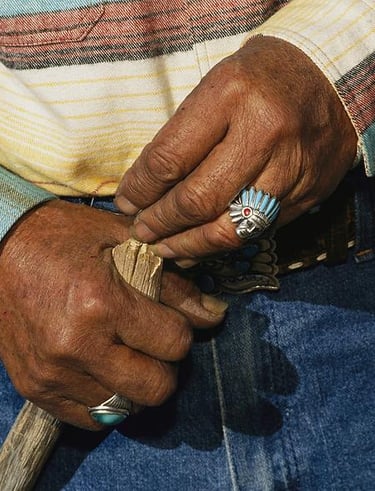
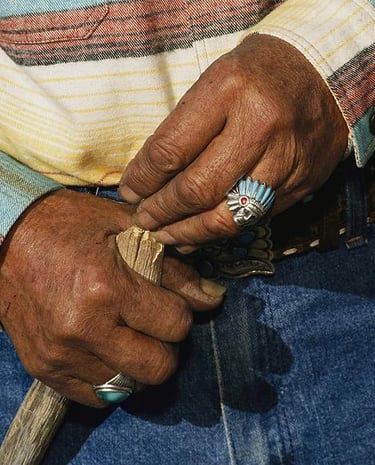
Amber & The Stone
Finding Peace and Purpose in a 24/7 World
In a world where time feels like it's always running out, we've forgotten our most powerful inheritance.
The Ancestral Watch reveals that your cultural heritage isn't just nostalgia—it's sophisticated time intelligence that has been stress-tested across millennia. Drawing from his unique Navajo, Lithuanian, and Japanese lineage, Tony Skrelūnas guides you to reset your internal timing to ancient rhythms that bring peace, purpose, and profound connection.
Through a powerful synthesis of three wisdom traditions, you'll discover:
The Stone Breath – A Navajo resilience ritual that teaches you to breathe under modern pressure in just three minutes.
The Daily Reckoning – A Japanese-Lithuanian practice of three questions that restores perspective and clears your emotional ledger each day.
The Clan Protocol – Ancient kinship principles for building circles of true alliance that outlast any organization chart.
The Seventh-Generation Filter – A decision-making framework that shifts your lens from quarterly returns to legacy that echoes for centuries.
The Warrior's Code – The Hopi-Lithuanian covenant of strength serving vulnerability, teaching you to protect what matters while nurturing what grows.
The Harvest Map – A way of seeing your life not as a resume, but as a living ecosystem of contribution.
This isn't another time management book. This is time transformation—shifting from counting minutes to making minutes count, from being busy to being purposeful, from chasing deadlines to honoring lifelines.
Whether you're a leader seeking sustainable impact, a parent wanting to pass on more than possessions, or anyone feeling the soul-deep exhaustion of success without meaning, The Ancestral Watch provides the practical tools to:
• Reclaim morning rituals that install calm before the day's storms
• Make decisions through a seventh-generation lens
• Build modern clans using ancient kinship protocols
• Find your unique balance between strength and purpose
• Live in ceremonial time amid digital chaos
Your wealth is not in front of you, waiting to be earned. It's behind you, waiting to be claimed.
The Ancestral Watch is your guide to that remembering.
Gallery
A visual journey through cultures and landscapes that inspire the book.
Connect
Reach out for questions or book pre orders
Wisdom@ancestralwatch.com
© 2026. All rights reserved.