
Stories & essays
What the messengers left out in the open.
Writing between two inheritances — a method for carrying a tradition without stealing it, a letter to the Lithuanian diaspora, and five essays on a Japanese garden built in the high desert.
Baptised in
1387
The last pagans in Europe. Samogitia held out to 1413 — a thousand years after Rome, still keeping the old fire.
Žemyna, the earth mother · Perkūnas, the thunder · the sacred ąžuolas · Gabija, the household fire · Laima, who weaves fate
Featured · The Baltic
Blood and Amber: what the Baltic kept — and why it’s yours again
A letter to the Lithuanian diaspora: to the drawer with the amber gone cloudy, and the language fading one generation at a time.
It survived the Crusades. It survived the Tsars, who banned the alphabet itself. It survived Siberia, and it survived an ocean crossing. Nobody handed it to you with instructions — but nobody took it away, either.
Read the essayWhat was actually kept.
Not a costume and not a theme park. A living language, a body of song large enough to be a library, and a smuggling network that treated the alphabet as contraband worth prison.
You are richer than you think.
From Blood and Amber
Ideas & framework
Three essays on the working question behind the whole series: how do you pick a tool back up without pretending it is yours, and what did the messengers actually know?
The method
How to carry a tradition without stealing it
The wellness economy sells the messengers’ tools with the messengers’ world deleted. The alternative is a method: take the timeless principle out of the time-bound practice, name the hand it came from, and leave what was never yours.
“A birthright cannot be appropriated, because every people on earth was once indigenous somewhere.”
Read the essay →
Who carried
Never only men
The memory-keepers. The singers who held a people’s law in melody. The midwives who walked out at night. The divers who went down on one breath and came back up with the food.
The far messengers were never only men — and the record says so plainly, once you stop looking only at the runners.
Read the essay →
The practice
The calm you already stored
Steadiness is not something you summon in the emergency. It is something you put away beforehand, in ordinary hours, and draw on when the ground moves.
The messengers knew exactly where they kept theirs — and so, it turns out, do you.
Read the essay →
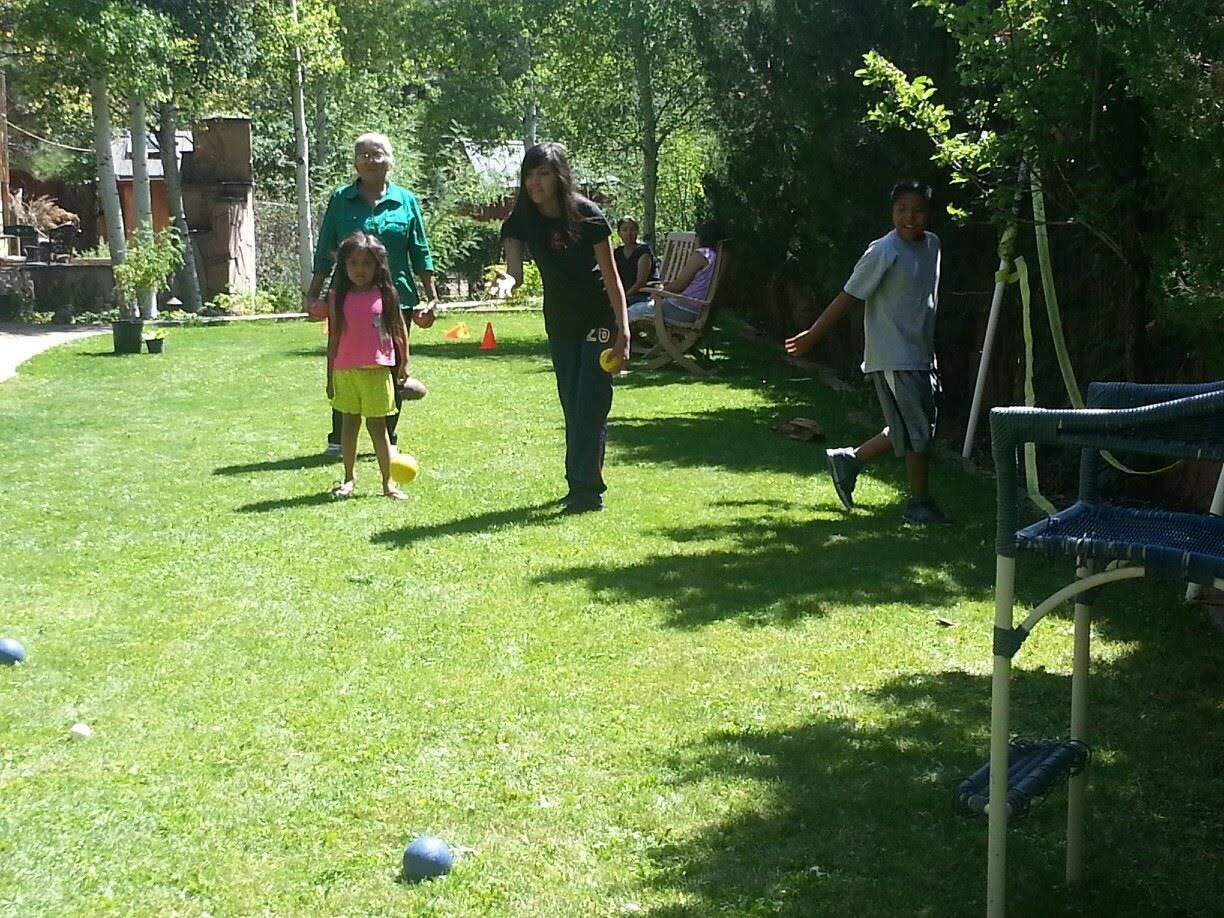
The Japanese garden · Five essays
Japan reached a Navajo boy by kerosene light.
Forty years later his family built the garden it had promised him — and tended it twelve years before letting it go.
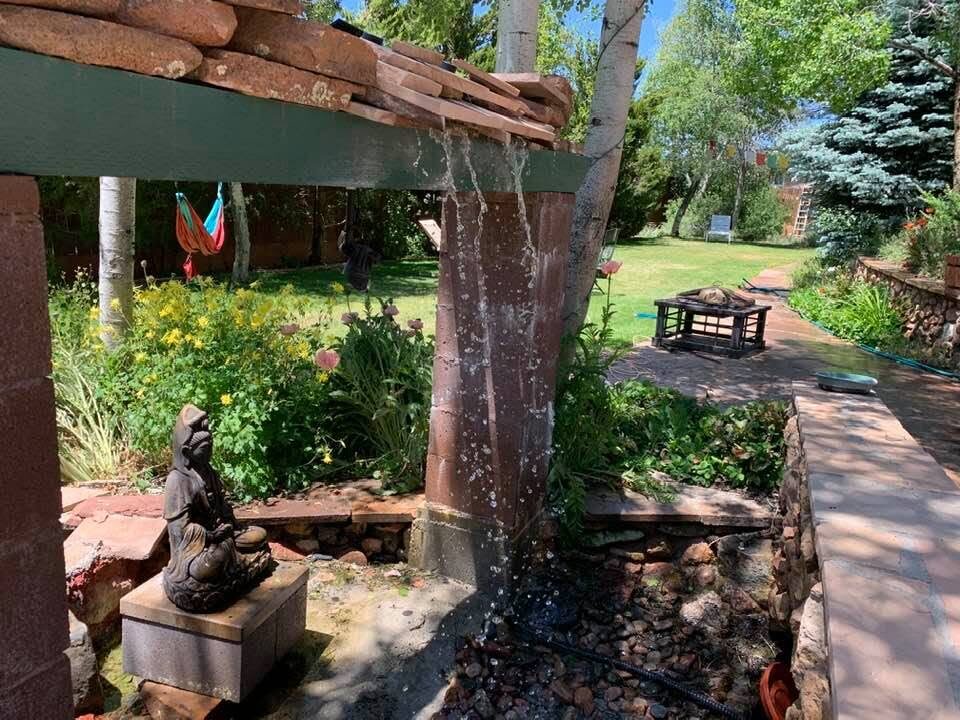
A Torii in the High Desert
How Japan reached a Navajo boy by kerosene light, and the garden his family built from it — a koi pond, a waterfall, a torii with a Buddha beneath it, an arched stone bridge, and a meditation room framing a sacred mountain.
Tended twelve years. Then released.
Read the essayFour more from the same water.
Each one takes a single feature of the garden — the fish, the ground, the sound, the crossing — and follows it back to what it was built to teach.
Essay two
The Koi and the Dragon Gate
The tōryūmon legend: a fish climbs the falls and becomes a dragon. The same hard water that could sweep you away is exactly what makes you greater. It is also why koinobori are flown for children.
Read the essay →
Essay three
Why a Garden Is a Spiritual Practice
Wabi-sabi, and attention as a form of devotion. Plus shakkei — borrowed scenery — the discipline of composing with a mountain you do not own and cannot move.
Read the essay →
Essay four
The Sound of Water
Misogi, the buried chime of the suikinkutsu, and flow — with the plain physiology of why moving water settles a nervous system that will not settle on command.
Read the essay →
Essay five
The Arched Bridge
The taikobashi as threshold, and higan — the other shore. On being a person who belongs to two places and fully to neither.
Read the essay →
Some people are not meant to stand on one shore. Some people are the bridge.
From The Arched Bridge
Written by
Tony Skrelūnas
Lithuanian and Diné. Raised in a hogan on Big Mountain by his great-grandmother; learned to read by kerosene lamp. These essays are the working notes behind The Ancestral Watch — the reading, the arguing, and the years of practice that would not fit inside the novels.
More about TonyWrite to me
Tell me what you carry.
If one of these essays named something you had no name for — the drawer, the language, the garden you let go — I would like to hear it. The address goes straight to me.
wisdom@ancestralwatch.comI read everything. I answer what I can.